Welcome Guest User. You are not logged in.

The European Union Social Science Information Research Facility (EUSSIRF), 1998-2003
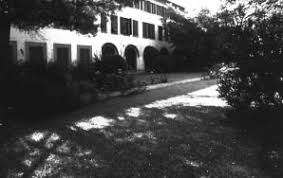
 

The EUSSIRF visiting fellows programme (1998-2003), jointly managed by the EUI and the LSE, provided financial and expert assistance to researchers in Economics, Law, Social & Political Sciences and European History.

The European Union Social Science Information Research Facility (EUSSIRF) combined the complementary specialist strengths of two major European social science libraries. Together, the collections of the British Library of Political and Economic Science (BLPES) in London and the Library of the European University Institute (EUI) in Florence offer wide access to literature in the social sciences and humanities, and are particularly well equipped for research into a wide range of European socio-economic issues. 78 scholars from thirty countries participated in the 2000-2003 phase. 58 scholars from 22 countries participated in the 1998-2000 phase.


Recent EUSSIRF (Florence) Visiting Scholars

The European Union Social Science Information Research Facility (EUSSIRF) is a Major Research Infrastructure within the programme "Improving Human Potential (IHP) and the Socio-economic Knowledge Base". The aim of the IHP is to increase the human resources available for research and technological development. The Research Infrastructures part of this programme helps researchers gain access to existing facilities by providing travel and subsistence support, and specialist support, for research missions.

All EUSSIRF visiting scholars will usually be European academic researchers working in Europe on non-proprietary research. Florence missions are normally of one month's duration, although a maximum of two months may be requested.


Research Visit Proposals

Details of application procedures and downloadable forms are available here. Persons who do not have access to the internet may write to EUSSIRF Florence or EUSSIRF London for a printed brochure (see postal addresses below).

Please check the web-site of the London branch for all details of EUSSIRF LSE. Completed application forms (Word format) should be sent only to the branch you wish to visit. Application materials must be sent by post. Late or incomplete applications, faxed and e-mailed applications are not eligible and will not be considered by the Scientific Selection Board.


EUSSIRF - access, locations and eligibility

EUSSIRF - what it offers

EUSSIRF - when and how to apply

EUSSIRF - the two branches

Access, locations and eligibility

Access

EUSSIRF offers access to the collections, services, training, and academic environments of its constituent branches. Each branch implements a common programme of pre-arrival consultation and planning; training and assistance from information specialists in the exploitation of the infrastructure's resources during the visit as well as the provision of some computing and photocopying services, administrative support and the opportunity to integrate into the academic life of the infrastructure.

Locations

EUSSIRF is currently composed of two distinct branches located in Florence (The European University Institute Library) and London (British Library of Political and Economic Science). Scholars should direct their applications to the branch most suited to their research needs and should apply to one branch only. Further information on the resources and assisted access available at each branch is given below. Access to both branches of EUSSIRF is possible (see 'Common Access' for conditions).

Eligibility

EUSSIRF is open to academic and policy researchers carrying out non-proprietary research who fulfil the following requirements:

  • they are nationals and residents of a member state of the European Union or of an Associated State (Bulgaria, the Czech Republic, the Republic of Cyprus, Estonia, Hungary, Iceland, Israel, Latvia, Liechtenstein, Lithuania, Norway, Poland, Romania, Slovakia and Slovenia). Applicants must now be citizens of an EU or an Associated State AND working in an EU or Associated State in order to be eligible. (More states may be added to the initiative in 2003.) British and Italian researchers are entitled to apply to EUSSIRF but if they apply to the branch located within their countries of residence, EU rules prohibit the payment of travel and/or subsistence costs;
  • the results of the work carried out at EUSSIRF can be published in the open literature. Proprietary research (research where results are not generally available to the public or only made available under confidentiality arrangements) cannot be supported.

What can EUSSIRF provide?

Access to EUSSIRF Facilities

EUSSIRF can offer enhanced access to the collections, research facilities and services of its installations. Pre-arrival planning and on-the-spot assistance will boost the value to be extracted from the research mission. Practical training in modern research techniques will ensure maximum efficiency in exploiting the resources available at EUSSIRF's installations.

A Stimulating Academic Environment

EUSSIRF visiting scholars will be affiliated to a research centre within the parent organisation of the infrastructure which will give them the possibility of attending seminars and conferences, integrating into the wider academic life of the infrastructure and making contact with Professors, Fellows and other Researchers working on similar themes and projects. At the European University Institute, EUSSIRF Visiting Scholars are affiliated to the Robert Schuman Centre for Advanced Studies (RSCAS).

Common Access

In order to maximise access to EUSSIRF's collective resources, scholars accepted at one branch of EUSSIRF may also visit the other branch. Although the second visit will provide access to the collections, services and training of the other branch, it will not be financially supported and the timing of the visit will be at the discretion of the local EUSSIRF office.

Accommodation

Each branch of EUSSIRF will provide assistance in finding suitable local accommodation for visitors. At certain periods of the year outside term, it may be possible to offer university accommodation. Otherwise, the EUSSIRF branch office will assist in finding lodgings on the open market. The EUSSIRF Florence office acts only as an intermediary and cannot assume any financial obligations or make any payments on behalf of the visitor. It is not possible to cancel at short notice accommodation booked through the EUSSIRF (Florence) office. Any such cancellations will involve the subtraction of a substantial amount from the stipend to compensate landlords for lost bookings and, in extreme cases, the entire withdrawal of the EUSSIRF offer. Landlords charge an additional accommodation fee for accompanying persons, and these must be pre-announced in accordance with Italian law.

Subsistence

EUSSIRF visiting scholars will be provided with a per diem allowance to cover accommodation and daily expenses. For Florence, the 2003 maximum monthly subsidy is 1,400 Euros. In order to qualify for the full 1400 Euros subsidy, visiting scholars must be at the EUI Library for a minimum of 22 'access days'. An 'access day' is a day when the EUI Library is open. (Please see below for days when the EUI Library is closed.) When the Library is open for a half day, this counts as half an 'access day'. Visitors to EUSSIRF Florence are encouraged to time their visits to commence at the beginning of a calendar month. Health insurance will be the visitor's own responsibility.

Travel Expenses

Visiting scholars must make their own travel arrangements and EUSSIRF will provide a significant contribution towards the total cost of their travel (although it will not always be possible to meet the total travel costs). Payment by the EUSSIRF Florence office is normally executed within three days of arrival.


When and how to apply

Selection Procedures

EUSSIRF Florence has held four selection concours under the 2000-2003 (Fifth Framework) contract. 78 researchers were selected and invited. Applications to EUSSIRF Florence are reviewed by an international Scientific Selection Board (jury). Factors considered by the Board include the scientific value of the work proposed, the appropriateness of the proposed research to the resources available, the likely benefits to the visitor and the value of the collaboration to the host institution and researchers.

Deadlines

In the event that the EUI receives further funding to recommence the project, an announcement will be posted on this page.

Application Forms

Application forms are available from the EUSSIRF offices in London and Florence. If necessary the EUSSIRF office will send applicants a hard copy. However, an e-mail request to either London or Florence is preferable. Forms are also available here either for printing out or for downloading in Word 6 for Windows format. A set of explanatory notes accompanies the application form and should be read carefully before completing and returning it, by post, to the branch of EUSSIRF you wish to visit. It is not possible to submit electronic or faxed applications and any received will not be considered by the selection board.

Visitor Reports

At the end of the research visit, EUSSIRF scholars are required to provide these three reports:

  • EUSSIRF Visitor's Report (for the EUI Library)
  • Project Summary Report (for the EUI Library and the European Commission)
  • Questionnaire (for the European Commission)

The EUSSIRF Visitor's Report should describe your research mission under the following (or similar) headings: Aim of the visit/background; Summary of research and academic activities; Outcomes/written work in progress; New academic links established.

The Project Summary Report (form available here as a Word document) is a synthesis of the EUSSIRF Visitor's Report, to be sent to the EUSSIRF office in the web format structure.

The European Commission also requires visiting scholars to complete and return a Questionnaire (Word format). This questionnaire should be e-mailed as an attachment, directly, to Brigitte Sambain.

The 'Project Summary Report' and the 'Questionnaire' may also be accessed via the EU Commission's web site. Click on 'Access to Research Infrastructures'; and go to the fourth item on the list: 'How to manage your ARI contract'. The two report forms are:

'Part C: Project Summary Reports for Group Leader - MSWord 97'; and,
'Users Questionnaire (for Group Leader) - MSWord 97'

Each EUSSIRF visiting scholar is considered a 'Group Leader'. Please note: when completing all reports, refer to your host facility as: EUSSIRF Florence.

Papers published as a result of the visit should acknowledge that the research on which an article (chapter/working-paper) is based, was carried out at the European University Institute Library (Florence) under the auspices of EUSSIRF, part of the The European Commission's Access to Research Infrastrucures section within the Fifth Framework Programme (Improving Human Research Potential).

Copies should be sent to the EUSSIRF office.


EUSSIRF's two branches - London and Florence

The European Union Social Science Information Research Facility is currently composed of two distinct branches, located in London (The British Library of Political and Economic Science) and Florence (The European University Institute Library), which operate according to a common policy of providing visitors with assisted access to their collections, services and training programmes. Intending visitors should decide carefully which branch of EUSSIRF best meets their research needs and direct their applications accordingly. Only one branch should be applied to. Under a common access policy, visitors accepted at one branch of EUSSIRF may proceed to the other and participate in some of the assisted-access services. However, this visit will not be financially supported and the timing of the visit should be agreed in advance with the branch in question.

Below are brief descriptions of the EUSSIRF centres with links leading to more detailed local information


London - The British Library of Political and Economic Science

The BLPES is the largest library in Europe dedicated to political, economic and social science. Founded in 1896 the Library contains around 4 million bibliographic items, including 29,000 serials, of which around 10,000 are current files. Around 20,000 monograph titles are added to stock annually. The Library serves both the academic community of the London School of Economics and the international community of social scientists. Its scope is the social sciences in the widest sense of the term. Material is collected in the major languages of Western and Eastern Europe.

Collections of official publications from and relating to European states are extensive. Coverage of statistical publications is particularly strong. The Library has had EDC status since 1964. Other important collections include a depository set of United States government documents since 1903, and of the United Nations since its foundation. Many other international organisations are well represented, including OECD, ILO, IMF and WTO.

Access to all these resources is facilitated by the Library's catalogue, which has been computerised since 1980, and is accessible via the Internet. Through the LSE information network access is available to a range of CD-ROM databases, on-line services, and Internet sites. Training is available in the use of all these services. Since 1989 BLPES has been the source of data for the International Bibliography of the Social Sciences (IBSS), providing access to articles in over 2,600 selected international social science journals and around 8,000 books per annum.

The information resources available at BLPES permit in-depth research into wide-ranging questions of economics and economic policy, government and public policy, international relations, and many other areas. Its collection policy fully supports research undertaken at the LSE, where current fields of interest include: economic and social cohesion in the EU, comparative corporate governance, and European health policy. The opportunity given by EUSSIRF for increased scholarly contact and co-operation will contribute to the widening and strengthening of the academic social science network in Europe.

Research visitors to BLPES will enjoy access to research collections and resources, while benefiting from the specialist support and advisory services available. The planning and conduct of research will be assisted by information specialists, enabling a more purposeful and directed exploitation of collections and resources. In addition, access to user training programmes will develop and extend awareness and usage of information resources, in particular, electronic information services. Dedicated study space will be provided. Visitors will be affiliated to The European Institute, which offers a multidisciplinary approach to training, research and teaching on European issues. Opportunity will be given also to participate in the intellectual life of the LSE through attendance at lectures and seminars, and presenting paper(s) on their research topic.

Location

The BLPES is located in the historic heart of London close to the major institutions of politics, law and finance. Click here for maps

EUSSIRF London Contact:

Graham Camfield, BLPES, 10 Portugal Street, London WC2A 2HD, United Kingdom.
Tel: +44 207-955 7942 Fax: +44 207-955 7454
http://www.lse.ac.uk/library/wcutl/eussirf/eussirf.htm
e-mail: g.camfield@lse.ac.uk


Florence - The European University Institute Library

Over the past 28 years, the European University Institute has established itself as a leading centre for teaching and research, and is now the largest post-graduate social science research centre in Europe (approx. 570 doctoral researchers in 2003), unique for its multi-national composition. Its library collections now total over 570,000 volumes in both paper and microform. The total number of periodical titles is around 7,650 - of which some 3,700 are current files. On-campus electronic access is provided to 2,400 scholarly journals.

The EUI Library is a fully-automated, open-access, multi-lingual social science research library and is staffed by an international team of information scientists and information specialists. As well as having one of the finest European Documentation Centres in the EU with documents in four languages and privileged access to EU databases, the EUI Library is a deposit library for the Council of Europe. There are also extensive collections of documents from other international organisations such as the United Nations and the Organisation for Economic Co-operation and Development (OECD). Law reports, parliamentary debates and official journals exist for the major member states. Archives of European newspapers for the post-war period are held on microfilm. A fully-catalogued working paper collection provides access to the latest research in economics and political economy. The EUI is also the repository of the Historical Archives of the European Communities, located at the nearby Villa Poggiolo.

The EUI Library has full access to the Internet (including its own www server), on-line access to major database hosts throughout the world and an increasing number of subject-orientated CD-ROMs (available on the EUI network) which enhance exploitation of its extensive periodicals collections as well as providing the means for comprehensive bibliographical research across a wide range of subject areas, documentation types and countries. An increasing number of electronic resources is also being made available. Practical training in the use of these research tools is offered.

The collections of the EUI Library and its information policies have been developed over the course of 28 years' experience in serving the European social science research community. Rich archive resources and unique access to a whole range of EU documentation offer the possibility of research into all aspects of EU history, development, policy formation and implementation, as well as wider comparative European political and socio-economic issues. Research in social, political and legal theory has also been frequently and successfully conducted at the infrastructure. The opportunity given by EUSSIRF for increased scholarly contact and co-operation will contribute to the widening and strengthening of the academic social science network in Europe.

Research visitors to EUI will enjoy access to research collections and information resources, while benefiting from the specialist support and advisory services available. The planning and conduct of research will be assisted by information specialists, enabling a more purposeful and directed exploitation of collections and resources. In addition, access to user training programmes will develop and extend awareness and usage of information resources, in particular, electronic information services. Visitors will be affiliated to the Robert Schuman Centre for Advanced Studies, which promotes inter-disciplinary research on the main issues facing European society. Opportunity will be given to participate in the intellectual life of the EUI through attendance at lectures and seminars.

Calendar 2003 - EUI Library Florence

The EUI Library is closed on Sundays. For full details of EUI Library opening hours during 2003, please access this Calendar.

Please note that in the early-mid 2003 the EUI Library refurbishment will continue. Although the Library will be fully functional, visitors may experience some brief delays in delivery services.

Location

The EUI is located in a number of historic buildings on the hillside of Fiesole just outside Florence. Its Library is housed in a modern wing attached to the 15th-century Badia Fiesolana. Directions for arrival.

Florence Contact:

Thomas Bourke, Ph.D
European University Institute
Badia Fiesolana
Via dei Roccettini, 9
San Domenico di Fiesole
50016 Florence
Italy

Tel: + 39 055 4685 346 / 904
Fax : + 39 055 4685 283

Page last updated on 05 August 2009

Latest News

Agence Europe online: DanteWeb

Description
The Library has access to Agence Europe online (DanteWeb) as of 1st of September
Date:
31/08/2010

Interdisciplinary introduction to the Library's electronic resources

Description
1 September, 9.30-11.30, Theatre, Badia
Date:
04/08/2010